Write to Increase Your Own Empathy
The world needs a lot of things right now, and one of the things storytellers have to give it is empathy—a gracious ability to imagine how others think and feel.
You might have heard of the growing body of research confirming that reading fiction can improve our ability to empathize with people who are different from ourselves. But novelist Joshua Isard at Litreactor wondered whether writing fiction also makes the writer a more empathetic person, and his research led him to this great story:
One 2019 study examined whether writing fictional narratives could help healthcare workers have a more positive attitude towards people engaging in self-harming behavior. Since healthcare workers are meant to help such people, it’s important for them to avoid bias in order to do their jobs. Two studies examined whether creating a narrative about a woman who smokes cigarettes while pregnant could increase positive attitudes towards the woman. The study showed that “across both experiments, the narrative writing intervention increased participants’ empathy and perspective taking, evoked more positive attitudes toward a woman who smokes cigarettes while pregnant, and increased external attributions for her behavior.
So, in this case, yes: writing increased empathy.
You can read Joshua’s column here.
The next time you wonder if the churn and challenge of writing is worth it, please hear me whisper in your ear, Yes, you’re making the world a bigger, better, more connected place for everyone. Including yourself.
And if you’re feeling especially bold and daring—or maybe you just want to get through some writer’s block—try writing a short story from the point of view of someone you find impossible to understand.
See what happens.
THE NOVELISTS’ BOOK CLUB STARTS FEBRUARY 17
If you missed last month’s announcement, it’s not too late to register for the Novelists’ Book Club. I’m so excited to geek out about stories with you!
What you need to know:
• What: A casual one-hour meet-up to chat about stories and story craft
• When: Third Monday of each month, 12:00-1:00pm Mountain Time
• Where: Erin’s Zoom room (register to receive the link)
• Who: Novelists and aspiring novelists are invited to attend
• Why: Because there’s so much to learn and discuss about published examples
• How: Register here! And bookmark the web page to stay up to date on the novels coming up for discussion.
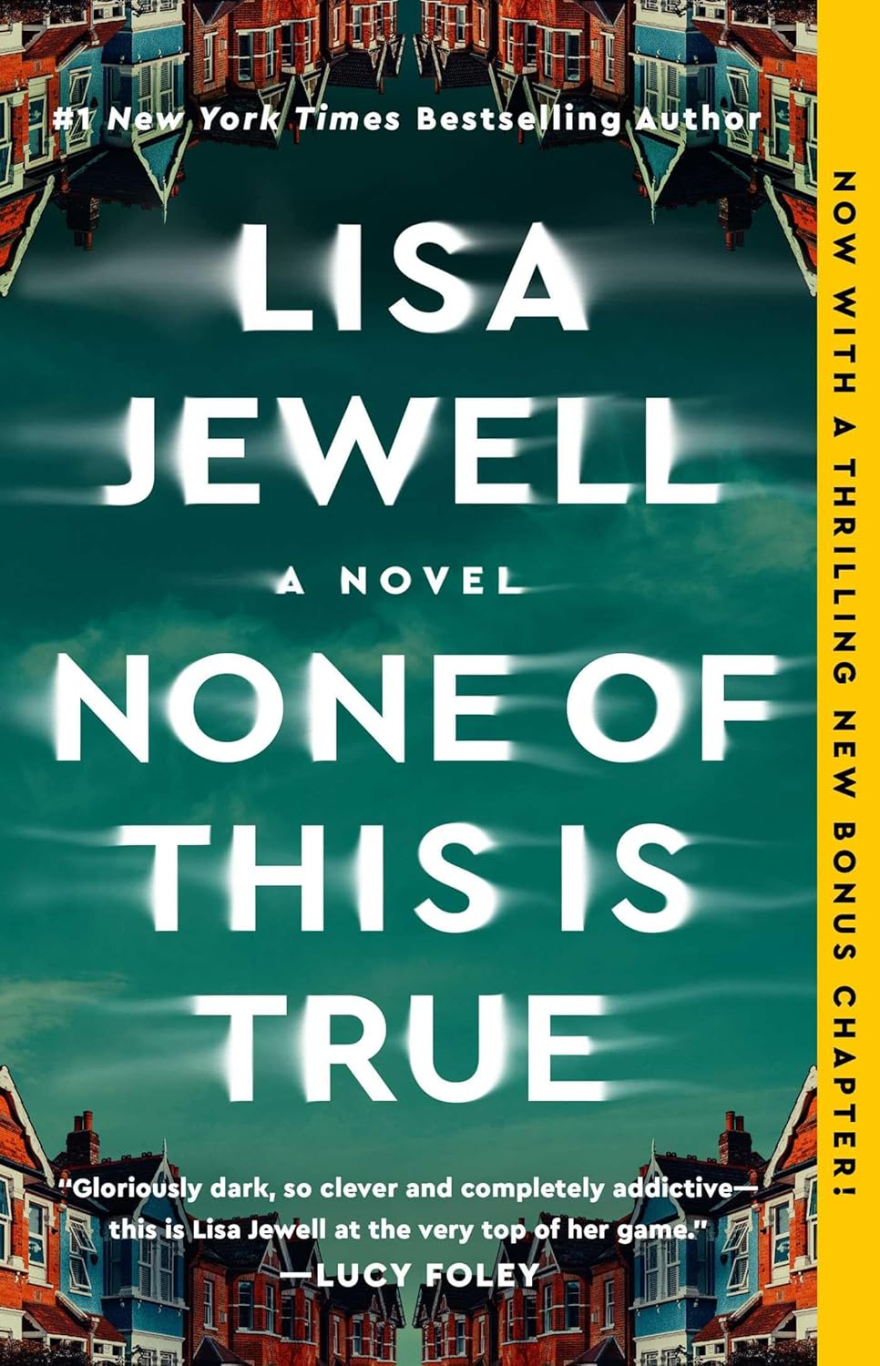
Up this month: None of This Is True by Lisa Jewell, featuring a discussion about unreliable narrators.
BETTER WRITING NOW
Do your sentences suffer from the “There Was an Old Woman Who” problem? Find out in this short video (3 min) and learn how to lighten your writing of unnecessary baggage. It’s a breeze.
QUESTION FROM A CLIENT
“Should I write my whole series before I pitch or publish it?”
As you’ve often heard me say: It depends! I often encourage writers to write the whole series first if:
- You’re writing your debut work. Don’t rush anything. Your writing will improve as you keep writing. Also, I bet you a coffee that while you’re writing book 3 you’ll make a discovery that you wish you could set up in book 1. Easier to do that if book 1 isn’t already published.
- The series places as much or more emphasis on its own story arc (such as Harry Potter) rather than on each individual plot (such as a detective-centered mystery series).
- You’re seeking a traditional publisher. At the least, book 1 must be completed before you submit for publication. In some cases you can pitch to a trad publisher with just book 1 and synopses of the books to follow. But they’ll see a lower risk if the series is complete to begin with.
- You want to release your work on a high-momentum schedule. How long did it take you to write and revise book 1? Are you willing to ask readers to wait that long between books? Are you confident life won’t disrupt your progress? If you want to release your series three to six months apart, is it realistic you could get it done?
As you establish a writing discipline and a track record of sales, you will likely be more confident to release series installments as you complete them. The “younger” you are in your career, the more I’d be likely to suggest that you write most of your series before you shop or print it.
SIMPLER THAN SCRIVINER
I’m a Scrivener fan who knows how to use only a fraction of what the software offers. If you prefer to write your stories with less overwhelming assistance, consider novelWriter, a free, open-source program that works with Windows, Mac, and even Linux. I’ve never used it myself, so let me know what you think.
WHAT I’M READING
We Solve Murders (cozy mystery/comedy) by Richard Osman, 2024. Even funnier—by dry British standards, and mine—than The Thursday Murder Club.
Go As a River (historical/coming-of-age) by Shelley Read, 2023. Set in my home state of Colorado, this gorgeous, slow paced, emotional story has echoes of Gap Creek and Where the Crawdads Sing.
Ninth House (YA/paranormal/dark fantasy/horror) by Leigh Bardugo, 2019, first of a series. The Ivy League meets the occult in a thriller Stephen King called “the best fantasy novel I’ve read in years.”
|