The Fearless Novelist, July 2025
WRITE THROUGH SELF-DOUBT
At some point in the course of writing each of my novels, I’m overcome with certainty that my story is coming undone. If I’m just beginning, I might fear it will never get off the ground. The pages of my manuscript are a house of cards that a light sneeze could obliterate. A simple thought paralyzes my creativity and confidence: You are not up to this task.
I once thought this anxiety would fade with time. Experience would lead to confidence. I don’t know why I thought this. I’ve been a published author and career editor for more than thirty years, and the talented novelists I know routinely experience self-doubt regardless of how much they’ve written.
And somehow, the rise of AI, which can crank out a full-length novel in a day or less, and the proliferation of novels of all kinds, conspire to make self-doubt worse.
Here are some of the strategies I've used to outwit our self-doubt:
Promise your inner critic a future job. I used to advise binding and gagging her and tossing her in a closet. Figurative murder might be an option. Today, I find it more helpful to recognize that our inner critic is only trying to protect us from failure and perceived foolishness. I can appreciate that. So now I say “I know you’re just looking out for me, but now is not the time! Please settle down until I can finish this draft and a revision or two. Then, when I’m in a place where I can tend to your concerns, I promise you, I’ll turn you lose.”
Show up each day. Engage your novel in whatever condition it’s in, and in whatever condition you’re in. Worst-case scenario: your story is coming undone and you’re not up to the task. Moaning this mantra from under a quilt can’t change the state of things. The only way to hold a work in progress together, discover real solutions, determine the actual value of the story, and improve your abilities is to keep doing the work. Showing up is the one self-disciplined action that (eventually) solves most story problems.
Limit the time you spend writing. If you usually write for four hours a day, limit yourself to two. If you aim for one hour, give yourself thirty minutes. Putting strict limits on your efforts (while showing up consistently) during times of self-doubt can heighten your focus, increase your productivity, and curtail the time you spend trash talking yourself.
Get input from a trusted adviser who can talk you out of your dark hole of doubt and maybe also brainstorm solutions with you. With any luck that will be your editor, or a writer with more experience than you. You might only need an objective, qualified reader (not your mom) to tell you that the story is in fact quite good and worth developing.
Be actively patient in seeking breakthroughs. Hold your story loosely. Generate new material but don’t throw the old stuff away. Try new techniques. Hit your daily word-count goal with stream-of consciousness dialog between you and a character about the problem you face. Write backstory that probably won’t appear in the novel but night reveal what you need to know about your characters’ journeys. Write unplanned scenes that deviate from your outline. Try writing an outline of the parts you haven’t imagined yet.
Not everything you write will be equally excellent or inspired, no matter how hard you strive to best yourself each time. As with any discipline, the level of maturity you can attain in your craft and genre is related to the amount of practice you put into it. Each time your self-doubt rears its head, you’ll be better equipped to hold it in its proper place.

PERSPECTIVE
“To write something that will excite [you] and excite others, [you] have to push past those desires to please and all the constraints of conforming ... [you] have to do something weird.” Lorrie Moore in a June 2025 collection of advice to novelists.
NEXT WEEK IN THE NOVELISTS’ BOOK CLUB:
PORTRAYING CHARACTERS OF FAITH
When: Monday July 21, noon Mountain Time
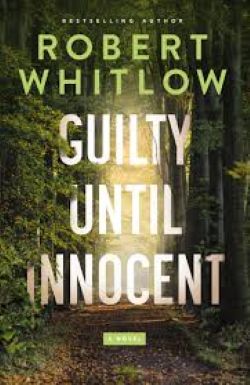
What: Guilty Until Innocent by Robert Whitlow
Where: Zoom. Register here to get your link. (If you’ve already registered, the link will be resent Sunday evening July 20.)
Robert Whitlow’s inspirational legal suspense is known for putting its Christian characters in challenging moral and ethical situations. In this novel, a Christian attorney has to justify proving a wrongfully convicted man’s innocence is more important than the lives put at risk in freeing him.
Discussion questions:
- What’s important to you when it comes to displaying a character’s faith? Which characters in this book exemplify those qualities? What would you have done differently?
- Faith can be static or dynamic in a character’s life. Which of Whitlow’s characters model each type?
- How powerful is religious faith in motivating Joe’s behavior? How about Paige? Ryan? Charlie?
- What makes a book feel “preachy” or agenda driven versus authentic when it comes to spiritual themes and faithful personalities? Where does this book sit on that spectrum?
WRITE BETTER NOW
If only it was (were?) easy to identify the subjunctive mood! This video (7 minutes) will make it easier.
YOU MIGHT BE INTERESTED IN...
Speaking of legal suspense: In June, two different cases were decided regarding the rights of AI developers to train their language models on published books without the authors’ permission. Both judges ruled in favor of AI, but for different reasons. One judge said AI was no different from a human who could learn from books on loan from a library (but also said most of those AI-training volumes were acquired illegally); the other judge said the plaintiffs had failed to make their case that the training was damaging to human authors.
Expect these cases to be the tip of an appeals iceberg. Even now, plaintiffs are arguing that no human being can read and learn from the staggering number of books AI models have consumed. Also, they’re regrouping to make a clearer demonstration of how authors’ earnings from licensing of rights have been clearly harmed.
Stay tuned! And read these summaries of the cases if you want more details: Meta AI Ruling, Anthropic AI Ruling.

QUESTION FROM A CLIENT
“How much detail about my setting should I include?”
When crafting a scene, the setting plays a crucial role—but how much description is enough? A good rule of thumb is to focus on what readers need to understand the action. Clear, purposeful description anchors readers in the scene, letting them track characters and events without confusion.
Beyond utility, the best details are the ones that surprise or linger in the imagination. A flickering neon sign in an otherwise sleepy town or the creak of an ancient staircase can do more than inform—they evoke, unsettle, or enchant. These memorable touches help bring a scene to life without overburdening it.
Tone and mood are equally important. The setting isn’t just a backdrop; it’s part of the emotional fabric of the story. Describing a rainy city street in sharp, cold terms might support a noir atmosphere, while a sun-drenched meadow could evoke calm or nostalgia. Choose details that reinforce what the scene wants the reader to feel.
Today’s readers, raised in a visual culture, are often adept at filling in the blanks. Rooms, streets, cafés—many are so familiar that a few well-chosen cues are enough. Leaving space for a reader’s imagination can deepen their engagement and foster a sense of collaboration with the author.
Of course, genre matters. Literary fiction, historical novels, and speculative works often benefit from more immersive world-building and sensory detail. By contrast, thrillers, romances, and contemporary stories tend to move faster and favor spare, suggestive description.
In short: be intentional. Describe only what serves the story—what’s necessary, surprising, emotionally resonant, or genre appropriate. Let the rest fade into shadow, and trust your reader to light the scene with their own imagination.

WHAT I’M READING
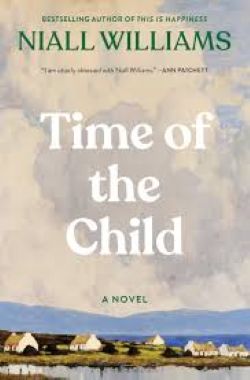
Time of the Child by Niall Williams (literary) / Ireland, Christmas 1962. A masterful model of omniscience, beautiful sentences, and rich portrayals of human emotion.
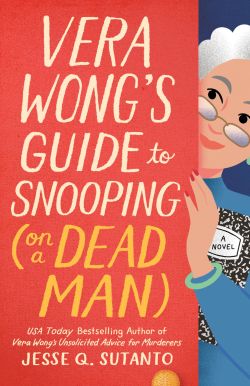
Vera Wong's Guide to Snooping (on a Dead Man) by Jesse Q. Sutanto (cozy mystery) / This sequel to Vera Wong’s Unsolicited Advice for Murderers has multiple points of view and a heavier subject matter, but the lighthearted and loveable protagonist still drives everyone crazy.
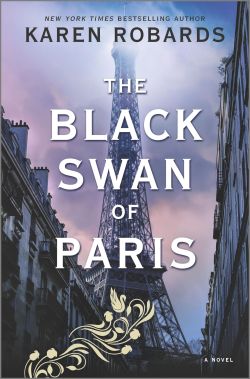
The Black Swan of Paris by Karen Robards (WWII thriller) / A famous singer adored by the Nazis uses her privilege to fight for the resistance.
|