Practice Makes Progress
Elizabeth Gilbert’s new memoir releases today. All the Way to the River is the third memoir she has published since she famously wondered aloud if her “best” work (the blockbuster Eat, Pray, Love) was behind her. How does a writer keep writing if it’s impossible to do better than they already have?
On the other side of this question are the writers who fear they can’t publish because their work isn’t “perfect” yet. If perfection is the goal, how can an author know when they’ve achieved it?
At face value, these questions beg a fear-based answer: whatever you do, don’t birth your book into the world, because if it’s not ideal, it’s worthless.
Which is of course ridiculous.
I prefer answers that urge writers to keep writing and publishing, no matter how imperfect the work.
If I’ve been your coach for any length of time, you’ve heard two of my favorite answers. The first is David Bayles and Ted Orlund’s parable of the pottery class, told in their (must-read) book Art and Fear. A pottery teacher divided his class into two groups. He instructed the first group to make “one perfect pot” in that session. He told the second group to make “as many pots as possible.”
Which group produced superior pots? The students who made as many as they could. (Ted Orlund is a photographer, and this parable is rooted in a true story about a class of photographers.)
The other response I love comes from the brilliant novelist Anne Patchett, whose essay “The Getaway Car” (also a must-read that appears in This Is the Story of a Happy Marriage) contains this passage:
Somewhere in all my years of practice, I don’t know where exactly, I arrived at the art [of writing]. I never learned how to take the beautiful thing in my imagination and put it on paper without feeling I killed it along the way. I did, however, learn how to weather the death, and I learned how to forgive myself for it.
Forgiveness. The ability to forgive oneself. Stop here for a few breaths and think about this, because it is the key to making art, and very possibly the key to finding any semblance of happiness in life. Every time I have set out to translate the book (or story, or hopelessly long essay) that exists in such brilliant detail on the big screen of my limbic system onto a piece of paper (which, let’s face it, was once a towering tree crowned with leaves and a home to birds), I grieve for my own lack of talent and intelligence. Every. Single. Time. Were I smarter, more gifted, I could pin down a closer facsimile of the wonders I see. I believe, more than anything, that this grief of constantly having to face down our own inadequacies is what keeps people from being writers. Forgiveness, therefore, is key. I can’t write the book I want to write, but I can and will write the book I am capable of writing. Again and again throughout the course of my life I will forgive myself.
To those pearls of wisdom I will offer my own free thought: where you are right now as a writer is a worthy place to be. It doesn’t matter if the work you are producing is “perfect” or better than your to-date “best.” Practice, produce, and press through your perceived inadequacies. This is the path of progress, there is no more fulfilling road to travel.

Perspective
“Writing a third person omniscient-leaning narrator is not the same as telling a story yourself. You’re not the narrator. You’re the person who brought the narrator in. You’re the one who—on a certain level, in a liminal space—gets to watch the narrator do all the work.” Patrick Ryan, author of Buckeye
Better Writing Now
“Vigorously Test Your Adverbs” The fewer adverbs, the stronger the writing! How can you identify adverbs? And what could possibly replace them? This video (6 minutes) answers both questions.
The Novelists’ Book Club
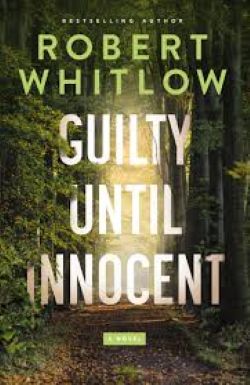
After a busy summer filled with diving trips, writers conferences, and family vacations, WE’RE BACK! The Novelists’ Book Club picks up where we left off with Robert Whitlow’s Guilty Until Innocent and a discussion of how to effectively portray characters of faith.
Join us Monday September 15 at noon Mountain Time. Zoom links will go out Sunday evening to those who are registered.
- What’s important to you when it comes to displaying a character’s faith, religion, or spirituality? Which characters in this book exemplify those qualities? What would you have done differently?
- Faith can be static or dynamic in a character’s life. Which of Whitlow’s characters model each type?
- How powerful is religious faith in motivating Joe’s behavior? How about Paige? Ryan? Charlie?
- What makes a book feel “preachy” or agenda driven versus authentic when it comes to spiritual themes and faithful personalities? Where does this book sit on that spectrum?
You Might Be Interested In . . .
Question from a Client
“How can I write chapter endings that make readers want to keep reading?”
Many readers set aside the books they’re reading when they reach the end of a chapter. What can you do to make them want to pick it up again as soon as possible? Strong endings keep them engaged by sparking strong emotion. This device is called a hook.
Hooks alone can’t make up for a story that isn’t well paced, but if you’ve tended to that with good scene structure, you can also learn to close scenes in ways that heighten tension rather than deflate it. Common strategies include:
- A promise: Foreshadow a critical revelation or change of circumstance, always staying true to your chosen point of view.
- A game changer: Drop a twist that raises stakes or alters how readers view a character.
- A tightening noose: Place the protagonist in imminent peril.
- A ticking time bomb: Emphasize an obstacle or looming deadline.
- A fork in the road: Present a crucial choice or question but withhold the decision/answer.
- An emotional echo: End with raw emotion that lingers beyond the page.
- An irony or reversal: Let the ending undercut expectations, deepening tension through contrast.
- A quiet cliffhanger: Sometimes restraint—a breath before confession, silence after insult—compels most of all.
How you time your endings matter too. Remember the screenwriters’ principle of “late in, early out.” That means start scenes as close to the central event as possible, and exit before the energy fades. Try to avoid cutting your chapters mid-scene. The “commercial break” trick often feels manipulative and can weaken scene structure (and pacing). The strongest chapter closings pose an implicit question—what happens next?—and launch your readers right into the next chapter.
Survey Results
Thank you to all who filled out my survey! Your answers help me to make decisions about future offerings. Here are the results:
How important is it to you to learn more story-craft principles and techniques (such as how to master POV, write a gripping scene, pace tension, and so on)?
87% Very Important
13% Somewhat Important
0% Not so important
How important is it to you to learn how to prioritize and protect the creative life you want to have?
57% Very Important
30% Somewhat important
13% Not so important
How important is it to you to have a clear process for self-editing and revising your novel?
61% Very important
39% Somewhat important
0% Not so important
How important is it to you to have regular contact with other novelists in a group setting?
26% Very important
52% Somewhat important
22% Not so important
If you could have only one of those four things, which would you choose?
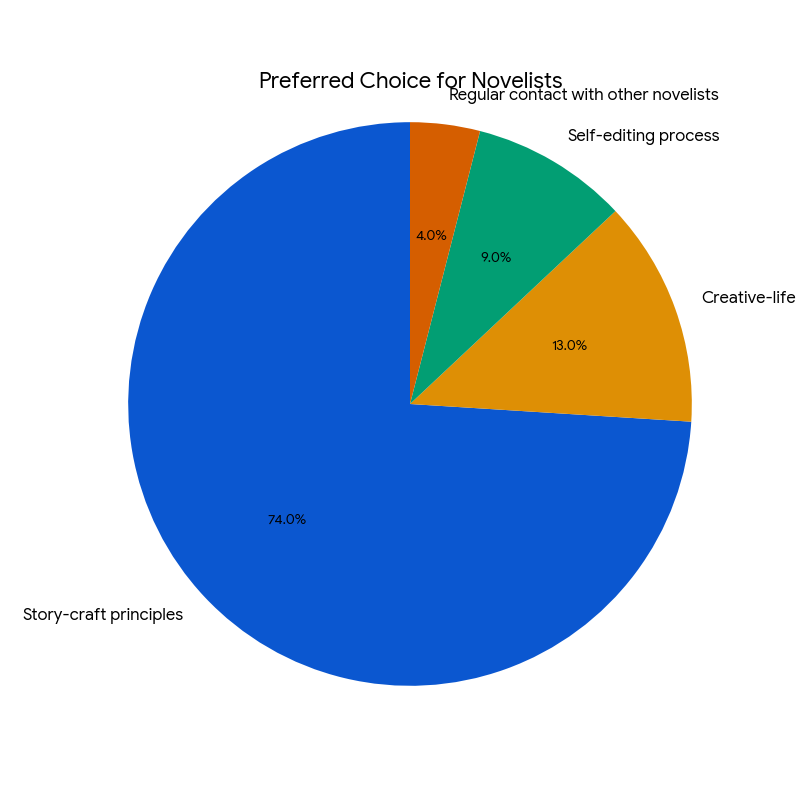
74% Story-craft principles
13% Creative-life protection
9% Self-editing process
4% Regular contact with other novelists
Do you prefer:
55% live instruction
45% self-paced recorded instruction
Do you prefer:
62% one-time seminars of 1-2 hours each
38% in-depth courses of 4-6 weeks
What I’m Reading
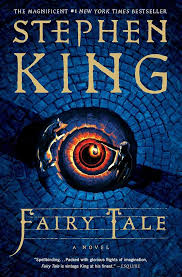
Fairy Tale by Stephen King / For those who like: teenagers you want to adopt; original Grimm’s tales; sinking into a long, slow (624-page) burn from a master.
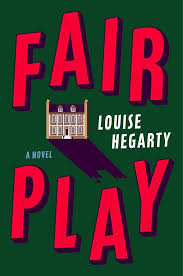
Fair Play by Louise Hegarty / For those who like: experimental fiction; poking fun at mystery tropes; sitting in the detective’s seat.
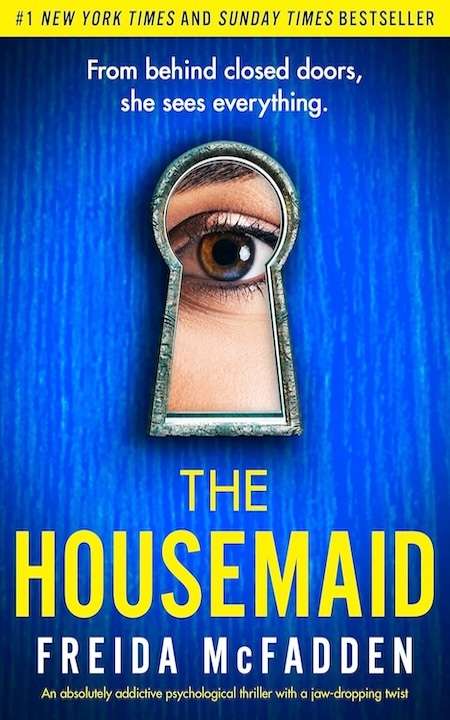
The Housemaid by Freida McFadden / For those who like: shock value over substance; poetic justice for psychopathic villains; being in the know.
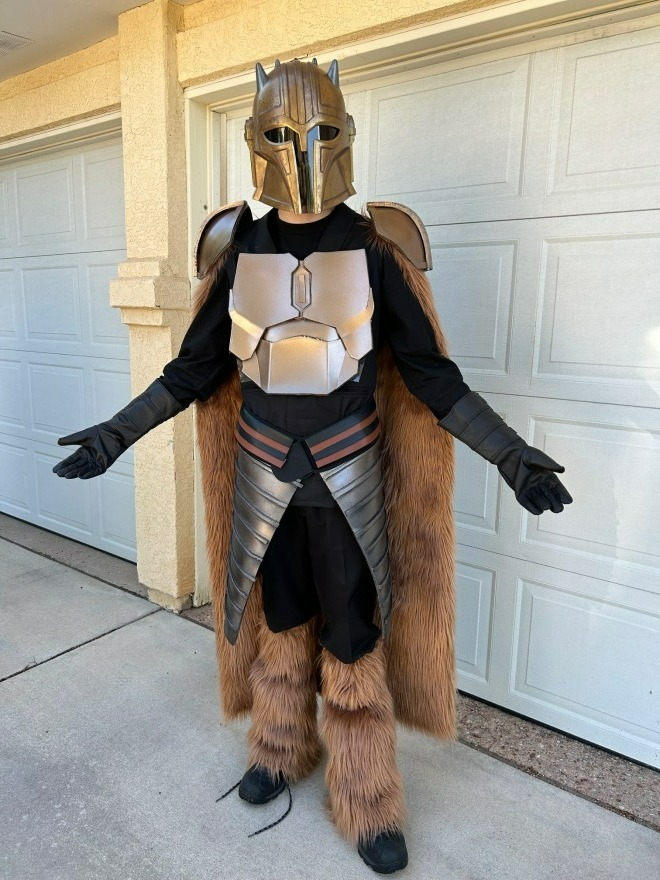
P. S. And if you wondered how my son’s Comic-Con costume turned out, here you go:
|