The Fearless Novelist, August 2025
THE COST OF NOT CREATING
When I texted my teenage son to ask if he wanted Comic-Con tickets for his birthday, he replied, “Yes! Though I would need a costume.”
“You don’t HAVE to go in costume,” I said.
“Yes,” he insisted. “As a certified nerd I do need a costume.”
The weeks since have been a flurry of foam, fake fur, spray paint, and craft-store forays for tools I didn’t know existed. Cha-ching! But birthdays are worth it.
Watching him bent over (yes, costly) armor patterns, dremels, X-Actos, and glue takes me back. I once made Pretty Darn Good costumes that dodged donation piles and passed from sibling to niece to neighbor. But I put away the sewing machine when supplies exceeded the cost of store-bought kits, and other demands claimed my time. Now my youngest is stepping into the gap.
It makes me wonder: what happened? I haven’t written a novel in ten years. I have a stack of story ideas, but haven’t finished the one poem I’m working on. Why? Time, energy, money—in a word, resources. Creation is costly.
Most of you reading this create by writing stories. Some of you make a good living from it. Some of you feel you only spend money on it. Some days you question whether the effort is worth it.
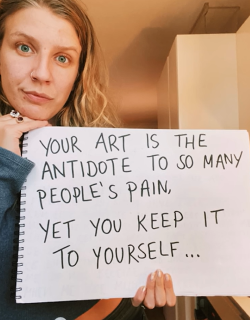
For a thoughtful answer, please watch novelist Amie McNee’s April 2025 TEDx Talk, “The Case for Making Art When the World Is on Fire.” Amie argues that the cost of not making art is immeasurably high: stop creating, and you risk losing connection with others—and yourself. You lose self-development, agency, focus, voice, and the ability to serve others with your gifts.
I’d add: you risk losing your sense of purpose. If we’re made in the image of the Creator but don’t create, we feel a dissonance.
So keep investing in your creative work, even when it costs too much or when “more important” things clamor for your time. You need your novels. So does everyone who reads them.
When I’m done with this newsletter, I’m going to play with my poem. Then before getting back to work, I’ll drop into the garage to help assemble a foam breastplate.
PERSPECTIVE
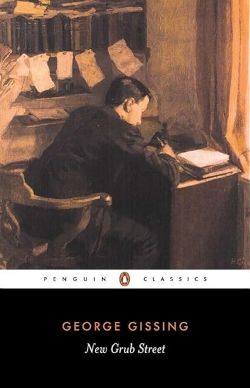
“A few days ago her startled eye had caught an advertisement in the newspaper, headed 'Literary Machine'; had it then been invented at last, some automaton to supply the place of such poor creatures as herself to turn out books and articles? Alas! the machine was only one for holding volumes conveniently, that the work of literary manufacture might be physically lightened. But surely before long some Edison would make the true automaton; the problem must be comparatively such a simple one. Only to throw in a given number of old books, and have them reduced, blended, modernised into a single one for to-day's consumption.” George Gissing, New Grub Street, 1891 (no, that’s not a typo)
I first read Gissing's novel in 1991, but I was reminded of this prescient quote after I read about this research, which suggests that while AI can help individuals be more creative, the collective suffers when all that creativity starts to look and sound the same.
BETTER WRITING NOW
“About to Fall Off, I Caught the Dangling Modifier.” This video (6 min) will show you how to sharpen your writing—and your clarity—by ridding it of this common grammatical error.
THE NOVELISTS' BOOK CLUB
I made an eleventh-hour decision to call for a summer hiatus, so we will NOT meet this month. Please plan to join us when we resume September 15 with a discussion about how to represent faith in characters, based on Robert Whitlow’s Guilty Until Innocent.
YOU MIGHT BE INTERESTED IN . . .
So many fun things to share this month!
- Literary Cleveland has a totally free virtual (and in-person, if you’re local) writers conference September 11-13.
- “When Success Doesn’t Follow You—Finding Identity As an Unpublished Christian Writer” is a valuable ACFW post by my client Jeffrey Friedel for anyone whose sense of identity is floundering in disappointment.
-
New Grub Street (quoted above) is a classic novel about the tension between writing to serve artistic vision versus writing to serve the markets. This Writer Unboxed post by author Harper Ross considers how it’s possible to do both.
- A rare first-edition of The Hobbit sold at auction last week for about $58,000 USD!
- Have fun playing with Atmosphere Press’s Book Title Generator. To see what it could do, I fed it these prompts: middle-grade novel that has mystery, intrigue, and action. A 12-year-old boy stumbles across a bank heist and is taken captive by the thieves. to escape, he must uncover the thieves’ identities and get word to his uncle, an amateur sleuth. But what's he to do when he discovers his uncle is among the criminals? Here’s what it gave me . . . not bad!
The Heist Next Door
Twelve Against the Odds
Uncle's Secret
The Kidnapped Witness
The Case of the Crooked Uncle
Stolen Secrets, Hidden Truths
The Bank Job Bandid
My Uncle the Thief
The Runaway Heist
Double-Cross at Dusk
I NEED YOUR FEEDBACK
What kind of support helps your novel-writing work the most? I’d love to know. If you're willing to tell me, please fill out this short survey (less than 5 minutes to complete). Your responses will help me do a better job of helping you. Thanks!

QUESTION FROM A CLIENT
"I’ve heard readers hate prologues. Is that true?"
Poor prologues. They take a lot of unfounded blame for boring readers. In reality, most readers don’t despise them unless they’re done badly. It’s writers who love or hate them.
A prologue’s job is straightforward: give readers just enough intrigue to hook them into the main story. Think of it like a chef’s amuse-bouche: a small, irresistible bite that makes you hungry for the full meal.
Before you commit to writing one, ask yourself:
- “Am I worried my first chapter isn’t strong enough to hold attention?” If yes, focus that concern on sharpening your opening and nailing the inciting incident. Pulling a dramatic scene from later in the book and slapping it up front is a tired shortcut that rarely works.
- “Does my prologue exist outside the main story structure?” A long-ago event or a POV that never appears again might qualify, but if you can weave the content into the main narrative, do that instead.
- “Is it a scene, not a lecture?” Narrative-heavy prologues often slip into info-dump territory. A vivid scene is far more compelling.
- “Is it intriguing or just confusing?” Many first-draft prologues either overload the reader with details or hide too much. Anchor yours in just one vivid, memorable moment.
- “What will my story lose without it?” When a reader finishes the book, they should feel the prologue was essential, not optional.
- “Does it match the tone, genre, and voice of the rest of the novel?” If not, make sure the mismatch is intentional. Readers will be disappointed if your novel doesn’t keep the promise the prologue makes.
- “Is it concise?” If it’s longer than your chapters, it’s probably doing too much.
Used well, a prologue can enhance a story. Make sure your prologue is remembered for the right reasons.
What makes you love or hate a prologue? I’d love to hear your take.
WHAT I'M READING
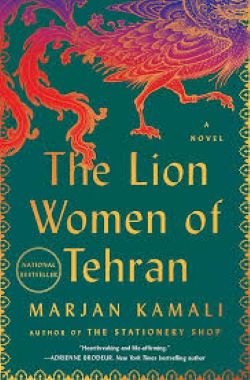
The Lion Women of Tehran by Marjan Kamali (2025). Historical fiction (1950s-1980s) about two Iranian women whose friendship endures intense political turmoil. A hopeful novel—one of my favorite books of the year.
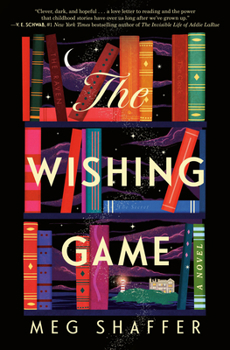
The Wishing Game by Meg Shaffer (2023). A famous children's book writer comes out of seclusion to give four people a chance to win the only copy of his final, unpublished novel. A contemporary feel-good story with a little bit of mystery and a little bit of magic. Debut novel.
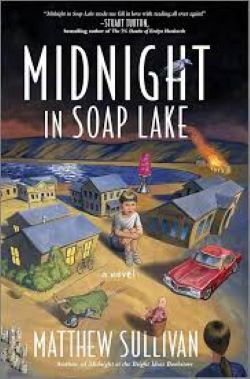
Midnight on Soap Lake by Matthew Sullivan (2025). A newcomer to a small, odd town becomes embroiled in a decades-old unsolved mystery.
|