December 2025
Great Expectations (Or: Six Free Gifts to Give Yourself)
When this time of year rolls around, I often hear some version of these two remarks:
“The schedule is crazy! I’m going to have to set writing aside until things calm down.”
And, “I finally have some time off, and I plan to get so much writing done.”
After the holidays, these statements evolve:
“It’s hard to get back into the groove of writing. I’ve lost some momentum.”
And, “I didn’t get done nearly as much as I’d hoped.”
Then there are the high achievers, who never miss a beat and hit all the goals. Seriously, I am in awe. For the rest of us, all of it’s true—this holiday season asks us to be flexible with our disciplines for four to six weeks. Also, we tend to overestimate how much creative energy we’ll have during our “time off” from regular commitments.
These realities aren’t problems that need to be fixed. They’re just realities. The new year comes and we find our way back to our novel writing work, with refreshed expectations. So rather than suggest you can devise a method to avoid disruption and disappointment, I’d like to invite you to experience this time of year a little more playfully, with three (totally free!) gifts you can give yourself that might enrich your storytelling efforts in 2026:
- The gift of a new character. Allow someone to capture your imagination. Pause to pay close attention, especially if you think you know them. Listen for new information. Ask after or imagine their fears, hurts, beliefs, and hopes. What do they need? Why can’t they easily have it?
- The gift of a new plot. Holidays are notorious for situational drama. How might a particular family, school, workplace, community, or social dynamic serve as a plot or subplot in your next story?
- The gift of a new setting. Traveling this year? Make a list of ten things you hadn’t noticed before about a familiar place. Make a list of ten things that defy your expectations of an unfamiliar place.
- The gift of a new perspective. Disruption has a way of helping us to see new things. Rather than focus on distress (“I hate not having time to write!” “I’m wasting this precious time to be productive!”) shine a different light on your situation. “I’m the protagonist in my own story, trying to achieve a goal. I’m going to do _____ to try to attain it! I’m willing to learn _____ from foiled efforts.”
- The gift of micro prose. Writing teacher Darien Gee teaches writers to tell powerful stories in 300 words or fewer—one page, folks!—with a free weekly prompt and ten-minute writing session. What a great way to exercise writing muscles you didn’t know you had with a low-commitment, limited challenge. I promise you’ll free your instincts, gain new skills, and have fun doing it.
- The gift of shaking things up: Athletes who never change their workouts eventually plateau; those who never rest will destroy the muscle they’re trying to build. Similar principles apply to creatives. Do your skills a favor by leaning into whatever is different for you this time of year. Whether you’re writing more or less or different than usual, allow that to be a good thing.
No matter what you do between now and the new year, make sure to celebrate it. I hope to see you in 2026!

Perspective
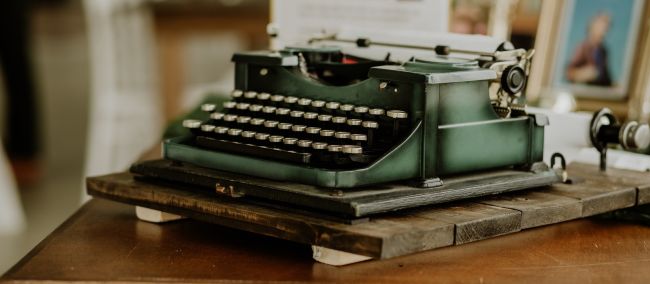
“I drafted an early version of this story on a shiny, black 1930s Corona Paul Lundy lent me. It was a fascinating experience that took...well, I'll just say ‘multiple’ days...and left me feeling like several of my fingers were about to fall off. My biggest takeaway from working on that beautiful machine was recognizing the immense patience and focus required to avoid scarring the typing paper with errors. Paul discusses the Zen of fixing typewriters in the piece, but that same mental state is essential for successfully operating an old manual like that Corona. If my attention wandered, even slightly, an error invariably seemed to follow, and since I avoided white-out, my mistakes were left ugly—covered by XXXXX or BBBB. This was a million miles away from thoughtlessly cutting and pasting on my MacBook Pro. It was like the typewriter was holding a mirror up to my very modern lack of attention.” Kurt Streeter commenting on the process behind his feature story "How to Fix a Typewriter and Your Life" for the New York Times November 20, 2025
Better Writing Now
Raise the Curtain on a Stage
One of the most common problems I encounter in scenes is the tendency of authors to open with a line of dialog. While this isn’t “wrong,” it can be problematic.
A line of dialog can be gripping and engaging: “You must believe me, son. Nothing bad will happen to you.”
It’s a good line. In the author’s imagination, the power of the promise is enough to pull a reader in. A reader might be disoriented, however. Who’s speaking? Where are they speaking? And to whom? Worse, they might make an assumption that later needs to be corrected. Ah, that wasn’t Dad talking, it was Mom. Both unnecessary questions and “recalculations” can pop your story bubble or boot readers out of your story, if just for a moment.
Generally, a stronger way to open a scene is to raise your curtain on a visible stage. Include vivid, specific details—even if just one sentence—that usher us into the moment with one or all of the following elements:
- Indicators of the physical space, including location, time of day, environment, and characters present.
- Identification of the POV character.
- Clues to the prevailing mood or emotion.
Up the stairs they raced, taking them two at a time, trying to be as quiet as possible. Gamache struggled to keep his breathing steady, as though he were sitting at home, as though he had not a care in the world.
“Sir?” came the young voice over Gamache’s headphones.
“You must believe me, son. Nothing bad will happen to you.”
This scene opener from Louise Penny’s Bury Your Dead shows us Gamache, not alone, racing up a stairwell in an urgent situation. There is imminent danger of some kind. The young voice is scared. The senior, Gamache, is reassuring. Clearly he does have some cares at hand. There’s plenty of intrigue—what’s the urgency? What’s the danger?—to pull us through, but nothing here that will cause disorientation.
Monday in The Novelists Book Club
How to use written communication (letters, emails, texts) to convey story elements.
When: Monday December 15, Noon MST
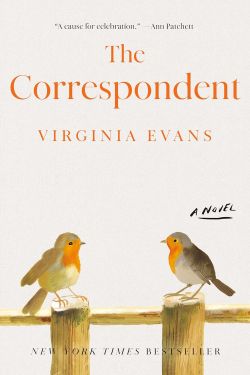
What: The Correspondent by Virginia Evans (epistolary)
Where: Zoom
My website (and therefore, my NBC registration page), is under renovation. So it you haven’t already registered but want to, please reach out to me at wweditorial@msn.com, and I’ll get you signed up.
The Correspondent is an epistolary novel, meaning it is a story told entirely in letters exchanged between characters. The irony of this form is that written letters usually “tell” recipients what happened, when one of the highest values of novel writing is that we “show” readers story events. But The Correspondent is enjoying a respectable run on the New York Times bestseller list. How did Virginia Evans make this form work?
Discussion Questions
- How did you feel while reading The Correspondent? What appealed to you? What disinterested you?
- There’s something voyeuristic about reading other people’s mail. How might that (much as reading someone’s journal) influence one’s experience with The Correspondent?
- The story starts in 2012, when letter writing was already largely out of vogue. Why does Sybil insist on writing?
- How did Virginia Evans “show” story events without access to scenes, which are the usual building blocks of a novel?
- How did she put her characters’ nature and behaviors on display through their letters?
- Throughout the story, the protagonist Sybil is writing a lengthy, unsent letter to an unknown recipient. What did this device add to the story?
- Do you like to use written communication in your own stories? What benefits and problems do they present to you? How do you solve those issues?
You Might Be Interested In . . .
Kudos Corner
Abby Ryckman is an ACFW First Impressions finalist for her romantic comedy. Congratulations, Abby!
Question from a Client
“Are writers conferences worth it?”
More than thirty years ago a family friend announced, “You need to attend a writers conference” and paid for me to attend one. There I met an editor who, one year later, hired me into an entry-level editorial position at his magazine, the first step in a satisfying editorial career. So yeah, I’m a fan of these gatherings of creative souls.
There’s no doubt that attending a conference is a big financial investment. In addition to the registration and special-events fees, you might also have to pay for transportation, lodging, and meals. Is it worth it? Financially speaking, you might not see a return on your dollars for a very long time. But the value of networking with professionals who can help you write, publish, and sell your stories is hard to quantify.
These questions might help you decide whether a conference is worth it for you:
- What do you want to achieve? If you want to pitch your book, don’t go until it’s ready for submission. If you want to learn and network, go at any time. If you’re looking to meet other writers in your region, focus on local conferences.
- Who is on faculty? Attend conferences with industry professionals who publish or represent fiction and, even more specifically, your genre.
- What opportunities will you have to meet these professionals? Choose conferences that offer one-on-one appointments and time outside of workshops (such as mealtimes) for conversations.
- Do the workshops cover topics you need to learn about? Will sessions foster your growth by elevating your skill levels?
Don’t forget to read reviews from conference attendees, and find out whether conference organizers offer regional or topic-oriented events throughout the year.
What I’m Reading
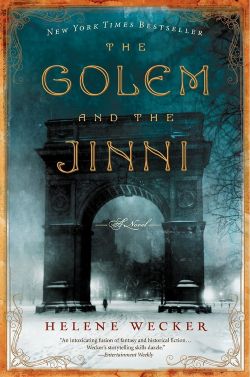
The Golem and the Jinni by Helene Wecker (historical fantasy/folklore) 2013 / A rare example of a bestseller with equally strong male and female protagonists . . . and NO romance thread. Beautiful sink-into-it storytelling.
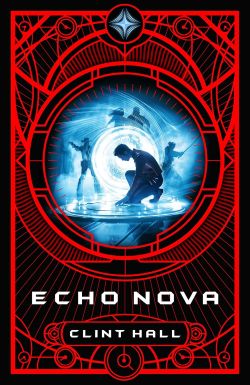
Echo Nova by Clint Hall (dystopian YA) 2025 / A good example of how an audience-relevant social issue (pursuit of media-based fame) can be adapted to a high-stakes futuristic sci-fi scenario. Fantastic transformative character arc.
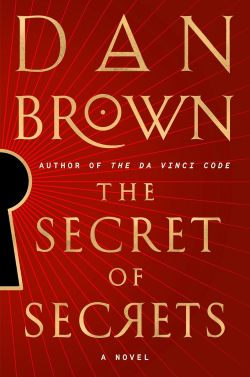
Secret of Secrets by Dan Brown (technothriller) 2025 / A good example of how a big idea and complex intellectual puzzle might overshadow character development but still “work” (but probably not as a debut novel).
|