|
June 2025
VISION IS GREATER THAN REJECTION
I wish I’d had the graciousness to craft this kind of rejection letter in the days when the slush pile was my responsibility:
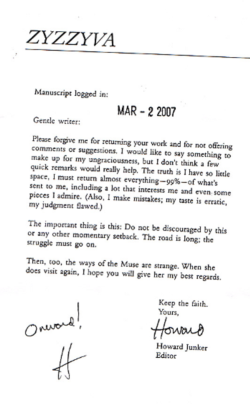
Even kind rejections sting, if not wound like a direct attack on your worthiness as a creative being.
Work that isn’t up to par will be turned away, sure. But what does “up to par” mean? It can mean many things, but one stands above the rest—the “up to par” that means “we have a high level of confidence we’ll see a financial return on our financial investment in you.” Let’s be honest: if publishers can’t make money, they have to stop publishing. So they publish Go Set a Watchman by Harper Lee not for its literary value, but for its monetary value.
Publishers are investors. They’re risk takers, and these days, they’re risk averse. This is why, when you pitch your book, the size of your existing audience matters, your genre and comp titles matter, and social media influence matters—often more than story craft. These things mitigate risk. Today, every book has a high uncertainty factor, which means that excellent stories are rejected right along with the poorly crafted, while some that are poorly crafted become bestsellers.
It’s almost enough to make a writer give up. How can you rejection-proof your will to write your novel?
Whenever I meet prospective clients, I ask about their publishing goals. Do they want to publish traditionally? Do they want to self-publish? But the more important questions are about vision:
- Why is your story so important to you that you’re seeking editorial help to write it well?
- What do you want your story to be and do for your readers?
- How do you want your readers to feel at story’s end?
- What will make you proud of your book?
The answers to these questions are bigger than the assessments of risk takers. The answers can carry a novelist beyond capricious rejections. The answers can help a writer stay the rugged course that artistic satisfaction requires.
How do you answer those questions? May your rejections be few . . . and may your vision carry you through the market’s whims.
THIS MONTH IN THE NOVELISTS’ BOOKCLUB: THEME
When: Monday June 16, noon Mountain Time
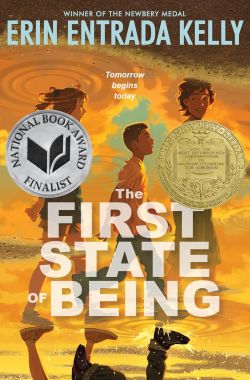
What: The First State of Being by Erin Entrada Kelly
Where: Zoom. Register here to get your link. (If you’ve already registered, the link will be resent Sunday evening June 15.)
This Newbery award winner for middle grade readers mixes history (remember Y2K?) and sci-fi time travel to help its young protagonist, Michael, contend with his fears about the future. I love MG novels and this one is a favorite. Come even if you haven’t read it for a great conversation about the significance of theme in storytelling.
Discussion questions:
- A theme is a philosophical statement or claim that a story makes. What theme(s) did you see in The First State of Being?
- What events in the novel point to this theme you’ve identified?
- How do Michael’s objectives compare to Ridge’s objectives? How do their conflicting goals help bring the theme into focus?
- How might the novel have had a different plot arc
- Do you think a novelist should write with a theme in mind or let it arise “organically” from a story? What are the pros and cons of each approach?
PERSPECTIVE
“I often think that one hallmark of a successful novel is whether its emotional universe is immersive enough that I forget my own concerns.” New York Times Book Review editor Joumana Khatib, “The Book Review” newsletter, April 8, 2025
BETTER WRITING NOW
Is that character’s remark dialog, a thought, or part of the narrative voice? What goes in quotes, what should be italicized, and what should be left alone? This video (7 min) explains how to tell the difference.
YOU MIGHT BE INTERESTED IN . . .
Jane Friedman’s “Hidden Gems” bestseller list—a list of books doing well that aren’t published by the Big Five traditional houses. You can get these monthly by subscribing to her free edition of The Bottom Line newsletter.
Gotham Writers advice on how to find—or curate—a reading list that’s right for you. (Hint: It doesn’t involve novels that don’t exist.)
QUESTION FROM A CLIENT
“I have conflicting feedback on my manuscript. Which should I listen to?”

No novel is universally loved—not even the classics. So when you receive conflicting feedback from editors, critique partners, or beta readers, you're not doing anything wrong. But figuring out what to take to heart (and what to let go) can be tough.
Even if the feedback doesn’t conflict, it might feel overwhelming. Here’s how to sort through conflicting opinions and make choices that support both your vision and your readers’ experience:
-
Let feedback “rest.” Don’t rush into changes. Let the feedback sit for a few days—or even weeks. A little distance gives you clarity and helps you respond with intention rather than emotion.
-
Look for patterns. If unrelated readers say similar things, that’s a signal worth listening to. Repeated feedback (especially on character development, pacing, or clarity) likely points to something readers across the board will notice.
-
Weigh outlier opinions thoughtfully. One-off feedback isn’t automatically “wrong.” Sometimes, a lone comment offers a valuable insight that aligns with your goals or sparks your creativity. Pay attention to feedback that excites you, even if only one person mentioned it.
-
Prioritize genre-savvy readers. Readers who love and understand your genre will often provide the most relevant, nuanced feedback. Their expectations align with your intended audience’s, which makes their comments especially valuable.
-
Trust your gut. If a piece of feedback sends you into a tailspin or makes you second-guess yourself, it may be pulling you away from your authentic voice. Trust the advice that deepens your engagement with the story rather than drains it.
-
Gauge your revision energy. Some feedback is excellent in theory but would require a complete rewrite or a change in genre, tone, or focus. Ask yourself: Do I have the energy—and desire—to make this change? What’s the potential payoff, and is it worthwhile? If it makes you want to quit, it may not be right for you or the book.
-
Clarify the purpose of each reader. Beta readers, critique partners, and editors all serve different roles. Some focus on big-picture structure, while others zero in on line edits or emotional tone. Consider what each reader is aiming to help with when weighing their input.
-
Look for the root cause. Readers often express a problem (e.g., “I didn’t connect with this character”) without identifying the cause (e.g., unclear motivation, inconsistent tone, missing backstory). Sometimes they don’t know the cause. It’s your work, and privilege, to identify the underlying issue.
-
Pay attention to what’s not being said. If no one mentions a theme, emotion, or plot twist you thought was central, it may not be landing. Silence can signal something important being missed—look beyond what readers say to what they don’t.
-
Separate taste from craft. Sometimes feedback stems from personal preference rather than a flaw. A reader might dislike nonlinear structure, open endings, or antiheroes—but that doesn’t mean they’re ineffective. Consider whether a critique reflects their taste or your presentation.
-
Revisit your original vision. Before making big changes, remind yourself what you set out to do. Are you writing to a theme? Subverting a genre convention? Creating a certain mood or experience? Let your vision serve as your compass.
-
Try “test edits.” Still on the fence? Experiment. Try out a suggestion in a single chapter or scene. Sometimes you don’t know whether a change will work until you see it in action.
-
Ask clarifying questions (if possible). If you have access to your readers, ask follow-ups: “Was it the character’s decision you didn’t buy, or how it was written?” You’ll often get more actionable answers by digging into vague reactions.
-
Keep a feedback journal. Track the feedback you receive, what you did with it, and how those changes felt. Over time, you’ll start to recognize patterns in what helps your writing and what doesn’t—and build trust in your editing instincts.
Feedback is a tool, not a mandate. The best responses won’t just make your manuscript stronger—they’ll deepen your connection to the work. Listen to what helps you write the truest, most compelling version of your story.
WHAT I’M READING
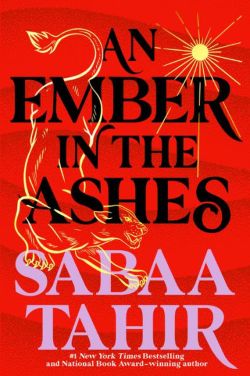
An Ember in the Ashes by Sabaa Tahir (2105), YA fantasy dystopian romance. Tahir’s bestselling debut evokes the Roman Empire and modern dystopian themes.
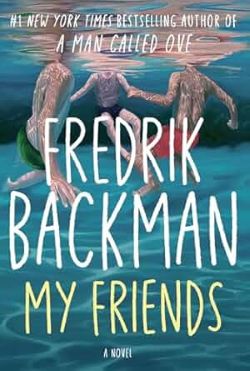
My Friends by Frederik Backman (2025), adult contemporary. Backman’s books are studies in contrasts: despair and hope, solemnity and humor. This redemptive novel has two intersecting plotlines: a teenage girl in possession of an artist’s priceless painting, and the artist as a teenager during one formative summer with his best friends.
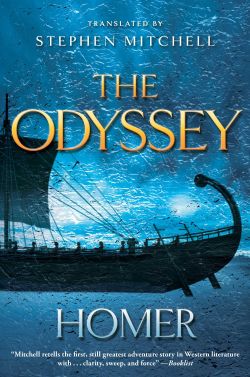
The Odyssey by Homer. This classic, the quintessential Hero’s Journey epic, has a new translation and a movie in the works. But I got hooked when my teen introduced me to Epic: The Musical by young songwriter Jorge Rivera-Herrans. Of course, Epic is an adaptation, so I decided to revisit the source.
|