|
November 2025
In Praise of Unfinished Novels Everywhere
I’m really good at coming up with ideas for novels. I’m less adept at seeing those ideas through. Sometimes I don’t even get started.
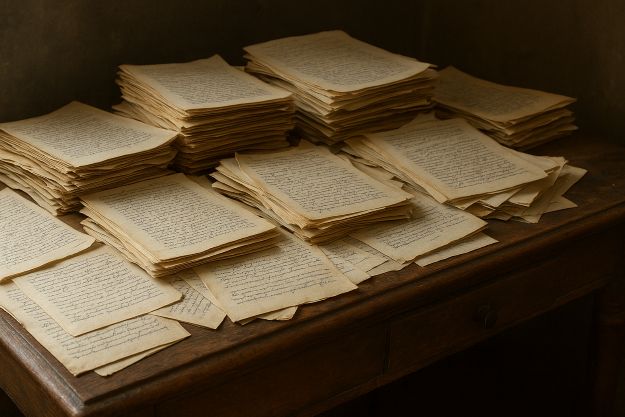
My latest idea is on the front and back of a piece of scrap paper I dragged from my desk after a quiet walk through the neighborhood.
Having scattered notes and a stack of half-baked stories can feel like proof that something missing in us: “I don’t have what it takes.” “My ideas always fall apart.” “My storytelling muscles will never be strong enough.”
Only a skinny line separates those self-judgments from secret fears: “No one could love this story but me.” “It’s too personal for public consumption.” “Why bother? No one will read it anyway.”
But what if all those unbegun and unfinished novels are evidence not of fatal flaws but of our ongoing growth? Each one shows where our fascination sparked, where our energy and attention faltered, perhaps where our fears crept in, and maybe even what we were trying to understand about the world or ourselves at that moment. Just as stories evolve over time, so do we. No one criticizes a kindergartener for not being in college yet.
No, I’m not calling you a kindergartener. But could you love your ideas and efforts for what they are—a record of insights into your creative process? What do they tell you about you?
“I’m passionate about .”
“Storytelling is important to me because .”
“No matter how long it takes, I’m going to .”
“I want to learn more about .”
“This story is worth revisiting so that .”
“I’m okay with letting this story go because .”
Delays and distractions come with the writing territory. Michael Chriton took twenty years to write Sphere. Stephen King let Pet Sematary sit in a drawer for four years before delivering it to his publisher. Joseph Heller took more than a decade to publish after Catch-22, no thanks to the pressure to measure up. George R. R. Martin still hasn’t finished his series A Song of Fire and Ice.
Finishing is satisfying, yes, but so is persisting. So here’s to every unfinished novel everywhere. Each one is proof that you’re alive to possibility—and that both your novels and your life story are still unfolding.
Perspective
“In the end, all publishers make business decisions that are not always based on the literary quality or the pure quality of the book. I don’t believe that quality is so objectively measured that we can say that any publisher—self-publishing, hybrid, or commercial—is truly, 100 percent dedicated to, ‘I’m only gonna publish books I believe in.’ I just don’t buy it.” Industry consultant David Wilk, The Bottom Line October 15, 2025
Better Writing Now
A Metaphor Is Like a Simile, But Better
Similes—comparisons between unlike things joined by the words like or as—show up a lot in novels:
- An uproar spread like wildfire through the crowd.
- Grief hit him like a bucket of ice water.
- Her smile was as pretty as an opening flower.
Nothing wrong with similes! But transforming a simile to a metaphor can sometimes do a better job of hitting the emotional bullseye:
- A spark of outrage ignited, then blazed through the crowd.
- The ice-bucket shock of grief drenched his mind and body.
- Her rosebud smile bloomed.
How to do it? First, delete like or as. Then make your two unlike things “same” instead of “similar”: anger is the fire; grief is an overturned ice bucket; the smile is the flower. The shift will require some creative revising, but the result is usually worth it.

Next Week in The Novelists Book Club
What are Tropes and Why Do They Matter?
When: Monday November 17, Noon MST
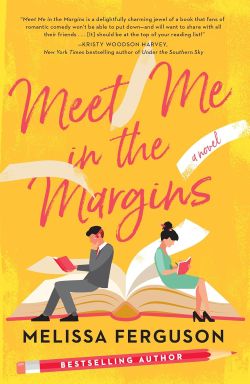
What: Meet Me In the Margins by Melissa Ferguson (clean romantic comedy)
Where: Zoom—Click here to register and read more information. (If you've already registered, you'll receive your unique link again Sunday night.)
Discussion Questions:
- What romance tropes do you identify in Melissa’s novel?
- How do those tropes serve the story?
- Why do tropes matter to readers?
- How are tropes different from cliches?
- What tropes do you prefer in your own novels?
You Might Be Interested In . . .
Kudos Corner
- Irene Wintermeyer’s unpublished novel Legend of the Dragon took first place in the speculative fiction category at the Florida Christian Writers Conference. Well done, Irene!
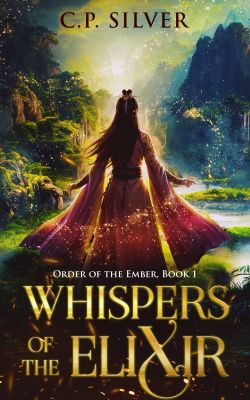
- Christina Bélargent, writing as C. P. Silver, released Whispers of the Elixir, the first in the Order of the Ember epic fantasy. Check out this gorgeous cover.
If you’re a current or former client who’d like to celebrate your literary accomplishment with other Fearless Novelists, drop me a note and I’ll include your news in the next edition.
Question from a Client
“How do I know when my novel is good enough to let go?”
Some storytellers don’t spend enough time striving for excellence; others keep working on their manuscripts far beyond the point of diminishing returns. One of my authors at WaterBrook Press was so reluctant to be finished that I worried I might one day find him in a bookstore aisle amending copies of his published book by hand. He laughed at that and admitted it could happen.
Novels are art, and only the artist can truly say when they’re done. If your intuition isn’t guiding you, and a hard deadline isn’t forcing the issue, these guidelines might help you find some peace about presenting your novel to the world:
-
Define your personal notion of an “excellent” novel. Some value page-turning plots and mind-bending concepts. Others prize genre-bending experimentation. Still others seek emotional resonance and character-driven arcs. What elements matter most to you? How have you honored those in your book?
-
Recognize that perfection is elusive—and partly determined by others. Your readers ultimately decide what “perfect” means for them. Consider releasing the notion of perfecting your novel and allowing readers to provide feedback that will help you continue to grow.
-
Aim for progress, not permanence. Ideally, each novel you write will be stronger than the last. Does the book you’ve written reflect the best of your current skill level? If not, keep working. If it does, you can let it go (and get started on the next one).
-
Know when tinkering has turned into avoidance. If your revisions continue to meaningfully improve the book and bring you satisfaction, that’s productive. But if you find yourself trapped in endless, inconsequential edits, consider that fear may be keeping you from moving on. What will it take to overcome that fear? The answer is different for everyone, but I’ve yet to see prolonged revising, editing, or beta reading make it disappear.
I’ve written and traditionally published ten novels, the last of which came out ten years ago. My prayer when I was writing them was a childish “Please don’t let me mess this up!” Today I’m glad they’re out there in the world. I’m grateful for what they taught me and the readers they introduced me to. I see their imperfections in a new light now. I’m aware of all I didn’t know and would do differently. I’m aware of who I am today, a very different woman than the one who wrote those books. I suppose that means I should get cracking on that next book idea and do it all imperfectly again.
Join me!
What I’m Reading
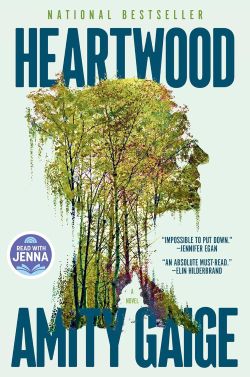
Heartwood by Amity Gage (character-driven thriller) 2025 / With good examples of parallel mother-daughter relationships, epistolary narratives, braided women’s points of view, and well-timed revelations.
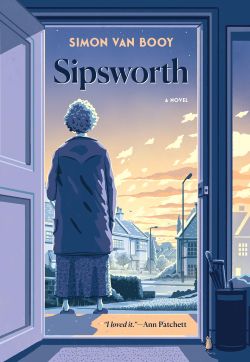
Sipsworth by Simon Van Booy (contemporary literary fiction) 2025 / With good examples of a bounded timeline, a strict point of view, character transformation, timely feel-good vibes, and brevity (under 50K words).
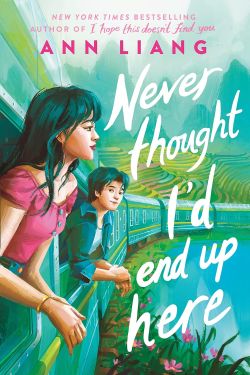
Never Thought I’d End Up Here by Ann Liang (YA romcom) 2025 / With good examples of the enemies-to-lovers trope, thematic and cultural depth, and Gen Y humor.
|