May 2025
GET THE JOB DONE WITH A “SPARE TIRE” WRITING PRACTICE
Now and then, I’ve been called an overachiever. On the day my overachieving self managed to impale my car’s tire with not one, but two screws, I had to resort to the spare—immediately. A spare is never as good as four equally treaded, properly sized tires. You don’t want to drive long distances on one, but it’s better than not driving at all.
Thousand-mile journeys happen a mile at a time, and we write our novels the same way: one word at a time, one hour at a time. But hours, like tires, are vulnerable to the occasional flat. We can be cruising along in creative four-wheel drive when—pssssssssssss!—the screws of interruption, emergency, illness, fatigue, or discouragement send us straight off the road.
This is life. The question is: do you have a “spare” in your trunk, or will you be sidelined for days, weeks, or even months?
Many of us have a sense of what an ideal writing practice looks like. Our “four-wheel drive” mode includes when and where we’ll write, what and how much we’ll produce, and what progress we’ll make on outlines, scenes, or revisions. Having a specific, detailed plan is key to meeting our goals and staying focused.
But having a backup plan is just as important. When the flat-tire days come, what’s the bare minimum you need to stay on the road?
- If you usually write five days a week, maybe your Spare Tire Practice is one day a week.
- If you usually write for an hour at a time, maybe ten minutes is enough.
- If you usually produce a thousand words, maybe two hundred will do.
- If you usually revise alongside drafting, maybe you’ll need to separate those tasks while in Spare Tire mode.
And so on.
If you’ve been sitting at the side of the creative highway waiting for a tow truck, ask yourself: What’s the bare minimum I need to get my writing practice back on the road? Better yet, pack a spare before you get a flat. It might take less than you think to keep moving toward your destination. Two hundred words a day—less than a double-spaced page—is still progress. Over a year, two hundred words a day adds up to more than seventy thousand words—the length of a bona fide novel.

PERSPECTIVE
“The work of writing a book is not the selection of suitable words. The work is the task of engaging another mind. It is a constant dance between understanding your subject and understanding how a future reader will react to it—a reader you can never know, but which you still have to intuit.”
—author John Higgs on what writers can do that AI cannot in his Substack “Octannual Manual” #59 May 1, 2025
WRITE BETTER NOW
There’s no need for two words where one will do. This video (4 min.) will show you how to recognize redundancies and eliminate them or use them intentionally.
YOU MIGHT BE INTERESTED IN . . .
. . . This essay from novelist Dwyer Murphy about his experience of using a combo of memories, in-person visits, and other people's stories to create a sense of place in a novel that centered on a specific kind of house.
. . . This interview with the novelist Sanibel about how she approaches linking her TikTok content to her novel To Have and Have More.
QUESTION FROM A CLIENT
“Do I need a sensitivity reader?”
One of my clients, a White male, is writing a novel that includes incarcerated Black characters who speak in dialect. After reading the manuscript, the publisher suggested hiring a sensitivity reader to assess his portrayal of these characters.
Sensitivity readers (also known as authenticity readers) are not editors. They are individuals with lived experience or specialized knowledge of a particular race, culture, nationality, faith, profession, or other identity. Their role is to provide authors with feedback and guidance on how to depict certain characters, cultures, experiences, or histories in ways that are respectful, accurate, and authentic. The goal isn’t to restrict creative expression, but rather to prevent harm, enhance accuracy and insight, and help authors build trust with their readers.
In one of my own novels, I included an autistic character. My publisher shared the manuscript with the mother of an autistic young man to gather her feedback on my portrayal. I put a high value on her perspective.
Consider using a sensitivity reader when you are:
- Writing outside your lived experience—such as when creating characters of a different race, ethnicity, gender identity, sexual orientation, religion, ability status, or socioeconomic background.
- Portraying traumatic or sensitive topics you haven’t experienced firsthand, including mental illness, sexual violence, addiction, systemic oppression, or war trauma.
- Referencing real-world cultures or historical events, particularly those involving traditions, beliefs, or historical traumas such as colonialism, slavery, or genocide.
- Incorporating language or dialect, especially vernacular or culturally specific terms that carry nuance you may not fully understand.
- Concerned about unconscious bias or stereotypes. If you're unsure whether your portrayal could cause harm or offense, a sensitivity reader can offer invaluable insight.
If you're working with a traditional publisher that requires a sensitivity read, check your contract to see who is responsible for covering the cost. Sensitivity readers typically charge between half a cent and two cents per word, but the feedback they provide can be invaluable.
To find a sensitivity reader, ask for recommendations within your writing or social communities, or search the hashtag #sensitivityreader. You can also hire them through professional organizations such as writediversely.com and editresource.com, or freelance platforms such as Reedsy and Fiverr.
COMING UP IN THE NOVELISTS’ BOOK CLUB
Our next meeting is Monday May 19 at noon Mountain Time. It’s never too late to register. Learn more about the book club here.
What we’re reading: The Briar Club by Kate Quinn
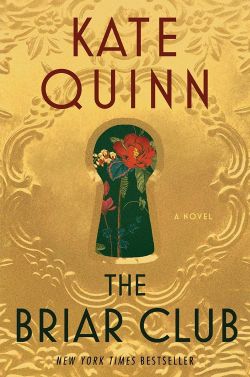
Our discussion will focus on how point of view (POV) choices affect storytelling. This novel features nine POVs: Pete, Nora, Reka, Fliss, Bea, Claire, Grace, Arlene, and the Briar House. (Yes, the house is sentient.)
Discussion questions:
- How is the house’s POV “omniscient”? How is it “limited”?
- What are the risks of having this kind of character in a mystery?
- How does Quinn leverage the House’s POV to serve rather than undermine the mystery elements?
- What’s your opinion of “still life” objects as characters?
- Typically, authors give POV to characters who (a) have a lot at stake and (b) are significantly transformed by the story events. Did any POV character not have something at stake or experience transformation?
- Would you have given POV to any additional characters? Who?
- What is the upside and the downside of having so many points of view?
- How would The Briar Club have been different if it were told from only ONE character’s POV? Which character would you have given this POV to? Why?
- Do you think the revelation of the killer was more surprising or less surprising than the typical mystery novel? What influence does the POV have on your opinion?
WHAT I’M READING
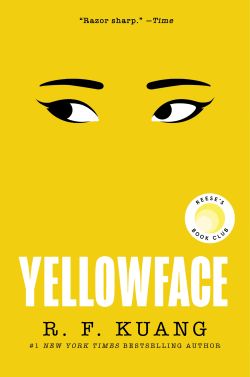
Yellowface by R. F. Kuang / The protagonist, who steals and publishes the manuscript of a dead friend, is insufferable, but the story is rich with complex, thoughtful observations about the current American publishing industry and cultural appropriation.
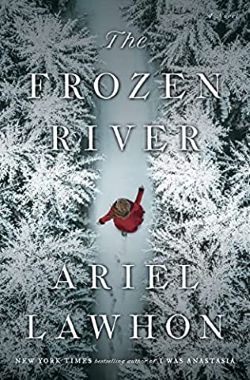
The Frozen River by Ariel Lawhon / A historical mystery loosely based on the real journals of an early-American midwife.
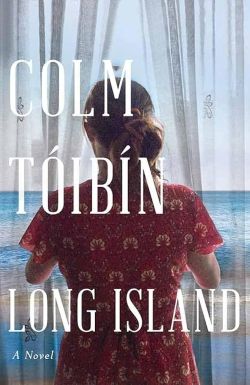
Long Island by Colm Toibin / I didn't enjoy this sequel to Brooklyn as much as the original, but the Irish literary great is a masterful writer.
|