March 2025
CAUSE TO CELEBRATE
“What are you celebrating this week?” My business coach leads every session with this question. At first it caught me off guard. Celebration wasn’t even on my radar, crowded out by hard work. After a quick mental scramble I could usually think of something: I finished a big project, got a new client, made progress on a goal.
My early thought was, how weird. Then I thought, how sad it would take me time to stop and think about that. Gratitude comes easily, but celebration is a step up for me. In the year my coach and I have worked together, I’ve become more aware of the value of having a celebratory mindset. The daily heavy lifting gets a little lighter. The frustrations don’t last as long. The motivation to continue endures. Today I find myself asking regularly, what do I have to celebrate? Surprisingly, I’m starting to think about celebrating in advance: My taxes will be done this week—and then I’m taking a day off! I’m about to record (finally) my first free video course—and release it with fanfare!
My active coaching clients will notice that I’ve taken a cue from my own coach: “What are your celebrations and successes since our last conversation?” is the first question in the pre-meeting form.
What are you celebrating this week? Celebrations in your life count for sure. In addition, what are you celebrating about your writing life? Maybe you:
- Just finished a draft or a difficult scene.
- Send out a batch of queries.
- Registered to attend a writing conference.
- Got helpful feedback from a reader.
- Decided to self-publish.
- Had a big aha moment regarding a storytelling technique.
- Signed with an agent.
- Were struck by an exciting idea.
Naming the thing you’re celebrating is just step one. How will you celebrate it? You might be throw yourself a book-launch party or splurge on a new computer—hurrah! But small celebrations are just as important. Share your good news with a friend, treat yourself to a walk in your favorite place, record your accomplishment in a journal that you read whenever the going gets tough. It’s too easy to forget how far we’ve come.
Want to share your celebration with me? I’d love to hear about it: wweditorial@msn.com.
PERSPECTIVE
“Literature, painting, music—the most basic lesson that all art teaches us is to stop, look, and listen to life on this planet, including our own lives, as a vastly richer, deeper, more mysterious business than most of the time it ever occurs to us to suspect as we bumble along from day to day on automatic pilot. In a world that for the most part steers clear of the whole idea of holiness, art is one of the few places left where we can speak to each other of holy things.” —Frederick Buechner, Whistling in the Dark
THE NOVELISTS’ BOOK CLUB IS MARCH 17
Our debut meeting in February was a hit, and I hope you can join us for the next meeting.
What you need to know:
- What: A casual one-hour monthly meet-up to chat about stories and story craft
- When: Third Monday of each month, 12:00-1:00pm Mountain Daylight Time
- Where: Erin’s Zoom room (register to receive the link)
- Who: Novelists and aspiring novelists are invited to attend
- Why: Because there’s so much to learn and discuss about published examples
- How: Register here! And bookmark the web page to stay up to date on the novels coming up for discussion.
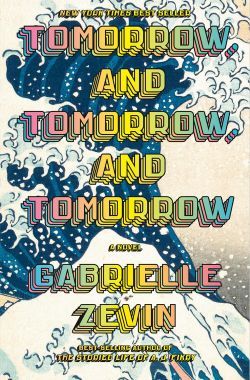
Up this month: Tomorrow, and Tomorrow, and Tomorrow by Gabrielle Zevin, featuring a discussion about upmarket fiction: how is it similar to and different from literary fiction and commercial fiction?
Discussion questions:
- “Upmarket fiction” is a blend of literary and commercial (genre) storytelling. What qualities do you ascribe to literary fiction? To commercial fiction?
- What elements of Tomorrow seem literary to you? Commercial?
- A few qualities of upmarket fiction include fully developed characters, substantive themes, and broad appeal. How does Tomorrow exhibit these qualities? What other “upmarket” qualities appear?
- Readers of genre fiction are attracted to it because of its conventions. Literary readers are attracted to fresh ideas and freedom from conventions. Why do you think readers are attracted to upmarket fiction?
- How does upmarket fiction reflect a commercial trend to “mash up” genres?
- Zevin wrote Tomorrow is a story “about work and also about love.” It is also about many other things. When you describe this story to someone, what do you say it is about? How does this variety show the “upmarket” aspects of this story?
BETTER WRITING NOW
Is your narrative riddled with negative descriptions? “She didn’t act like a professional.” “It wasn’t unlike my childhood experience.” “We wouldn’t die from disease, but from lack of food.” Learn three ways to make your vague, redundant, or unnecessary words more vibrant and positive in this video (6 minutes) about The “Not” Problem.
QUESTION FROM A CLIENT
“How good does my novel have to be if I plan to self-publish it?”
When you’re pitching your work to industry insiders, it has to be as “good” as they demand. But when you’re indie, you can publish whenever you’re happy with the work—at least, in theory. And that’s partly true. Traditional publishers push authors to do their best because they want a return on their investment (the bigger, the better).
Your goal might be financial success, impact, or personal satisfaction. But will your readers be satisfied just because you are?
This is one of the reasons I urge every novelist to study craft, no matter how they publish. Craft helps us connect with readers. The way you write your stories affects how people receive them. So in a way, your readers also get a say in how good your novel has to be.
What makes a novel “good,” anyway? In Erin’s world, it’s a book that successfully reflects your vision and satisfies your readers’ expectations. Simple! Sort of. Craft is what helps you get your vision onto the page in a way that actually works, and it’s a big part of what makes a book satisfying to read.
All novels can be better. You could tweak yours forever. At some point, you might think, It’s good enough. I’m not willing to invest more time, money, or effort. That’s fair. But I suspect you’ll be happiest with your work when you can say, This is the best I can do right now, with the skills I have today. Push yourself to that point. You’ll write more books. Each one will be better than the last. And you’ll be proud of them all.
PRODUCE YOUR NOVEL WITH AI AUDIO
The times, they are upon us: ElevenReader Publishing by ElevenLabs can help you turn your novel into an AI audio book for free. (But you’ll need a paid account to distribute them, for a low fee.) Jane Friedman, a publishing consultant I respect and often recommend, calls the technology “impressive” and says ElevenReader books can be distributed to Spotify and other retailers.
WHAT I’M READING
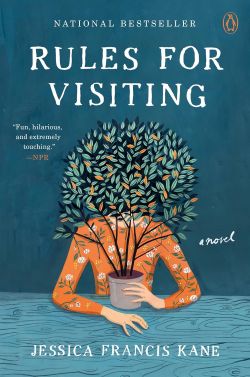
Rules for Visiting (contemporary women’s) by Jessica Francis Kane, 2020. A professional forty-something single woman reconnects in person with four once-close friends who have picture-perfect online lives.
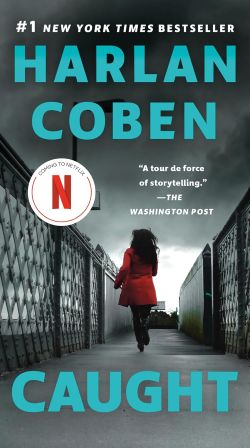
Caught (mystery/suspense) by Harlen Coben, 2010. A challenging novel about a journalist’s blind spots and culpability in her fight to expose truth. The potent forgiveness themes surprised me.
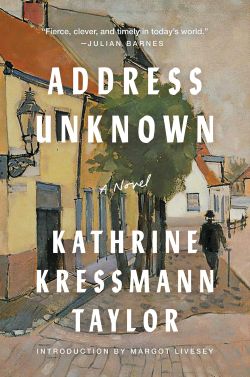
Address Unknown (epistolary novella) by Kathrine Kressmann Taylor, 1938. A moral cautionary tale told in an exchange of letters between an American Jewish art dealer and a former business partner in Germany.
|