The Fearless Novelist Newsletter
January 2026
What Matters (and Doesn’t) about Writing Rules
When I was a baby-faced editor with a tidy stack of sharp pencils, I cared a lot about grammar laws. I invested a lot of time in learning, remembering, applying, and explaining things such as the difference between (not among) that and which, or because and since.
The author who broke me of this—sort of—was a respectable university professor whose first novel, an award-winning bestseller, was riddled with typos and stylistic inconsistencies. The publisher hired me to edit the sequel. I explained to the author that following the industry standard, The Chicago Manual of Style, would ensure fewer errors in the second book. The author responded that the people who compiled CMOS were ignorant fools, and copy editors who couldn’t keep up with better ideas were to blame for the mistakes.
I sighed and noted the author’s preferences on the longest style sheet I’ve ever created. Without pulling a few all-nighters, no copy editor could have learned and applied all the author’s exceptions consistently to this singular manuscript. This is why the (highly intelligent) people at Chicago University Press created a standard. Also, copy editors don’t get paid enough for bespoke work.
On the other hand, English evolves as a matter of course and is changing faster than ever. Want to begin a sentence with a conjunction and end it with a preposition? Fine. You like fragments? No problem. You want to obliterate semicolons from your universe? Go right ahead. Break the rules.
As Dr. Finnian Burnett suggests in his essay “The Heart of Writing: Why Your Voice Still Matters in the Age of AI,” doing your own thing, errors and all, is preferable these days to the uniform perfection of AI-produced work.
But will your readers know what you mean? That’s the litmus test. CMOS says I can choose whether to open an email with the traditional “Hi, Steve” or with the current preference to go comma-free: “Hi Steve.” Why? Because neither choice affects meaning.
This isn’t always the case. A ham and cheese pizza are different from a ham-and-cheese pizza. As the famous meme reminds us, there’s a consequential difference between “Let’s eat, Grandma” and “Let’s eat Grandma.” Commas save lives, the saying goes.
When it comes to rules, the ones that still matter are the ones that reduce your risk of being misunderstood. Mastery of grammar is one thing that helps you convey exactly what you mean.
For the record, CMOS editors are educated and exceptional, and their standards help writers communicate clearly and effectively. If the 1100-page manual is a bit much for you, try the excellent desktop reference Woe Is I by Patrica O’Conner (fourth edition). If you want to ensure your story is optimized for clarity, hire a copy editor who knows CMOS to review your work. Better yet, learn what you need to know. The life you save may be your own.
Perspective
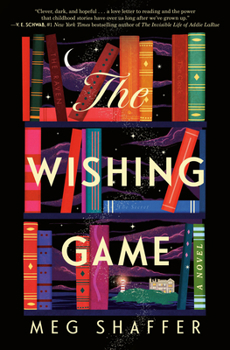
“God—or whoever is in charge of this planet—got drunk on the job one day and decided to give me the gift of writing. The way I see it, I have two choices. I can set that gift on a high shelf so it won’t get dinged up and nobody can make fun of me for playing with it. . . . Or I can have fun with it and play with the gift I was given until the engine burns out and the wheels come off. I decided to play. I suggest you do the same.” Jack Masterson, the fictional bestselling children's book author featured in The Wishing Game by Meg Shaffer
Upcoming Class: How to Revise Your Novel
After the first or second draft—then what? How can you get an objective view of your story while still standing inside of it? SUNDAY MARCH 8 from 2:00-5:00pm MST, I’ll host a live Zoom class to help you organize a clear and orderly process of revision. Learn methods for assessing your plot and pace, your character arcs, your stage settings, and your thematic clarity. Receive downloadable worksheets, examples, and resources to help you deliver your best effort to beta readers, agents, editors, and a paying audience. $149, limited to 15 participants. Register here.
Better Writing Now
Having mentioned a difference between that and which, I know a handful of you might lose sleep if I don’t explain. In British English, these relative pronouns are synonyms, which is why US writers can feel confused (or annoyed) when an editor starts changing the two. If you want to be an informed US English writer, here’s how to distinguish between the two:
- Use that restrictively to narrow your meaning. For example: “The books that I like are on the top shelf.” The books that I like is a restrictive clause because it limits (restricts) the meaning to only the books you like, not every book that might appear in the context.
- Use which nonrestrictively to expand your meaning, and set off the nonrestrictive clause with commas. For example: “The books, which I like, are on the top shelf.” The core idea here is, “All the books we are discussing are on the top shelf.” The nonrestrictive expansion adds, “and I happen to like them.”
In US English, the books which I like (no commas) is incorrect. Sometimes which can be used restrictively, but let’s save that for another lesson.
Does the distinction between that and which matter? The Chicago Manual says yes. After all, the two examples above mean different things. The British seem to have managed fine without that distinction, however. So I will leave the answer to you.

Monday in The Novelists Book Club
Fiction genres are stories that contain an identifiable set of conventions that readers expect in order to feel satisfied. Do you feel like you’re a slave to genre, or are you free to play with your work? In the spirit of breaking rules, we’ll discuss a playful genre mashup and consider the pros and cons of breaking free of story conventions.
When: Monday, January 19, noon Mountain Time
What: The Wishing Game by Meg Shaffer
Where: Zoom
Learn more about our monthly book club and register here.
Discussion Questions:
- What elements of which genres do you spot in The Wishing Game?
- How did the eclectic nature of The Wishing Game satisfy or dissatisfy you?
- How did Meg Shaffer use diverse genres to accomplish the feat of writing for adult readers while asking them to tap memories of being children who loved to read?
- What genre was not represented in The Wishing Game that you would have included if you were the author?
- What challenges do you face when thinking about how genre mixing applies (or doesn’t) to your own work?
- When should an author be faithful to writing “pure” genre?
Looking ahead: Our February selection is Theo of Golden by Allen Levi, a rare example of a self-published debut novel that rose to the national bestseller lists. What appealing qualities of the story helped make this happen?
You Might Be Interested In . . .
Kudos Corner
Tabbitha Mann (writing as Dorcas Renee) was selected from a pool of applicants to have a booth at the Williamsburg Book Festival in March. Congratulations, Tabbie!
Question from a Client
“How can I get the most out of beta readers?”
A beta reader is anyone willing to read your unpublished manuscript and give you feedback. That willingness is a generous gift! Not all beta readers are the same, though, nor will all give you useful responses. Consider these ideas when figuring out how to maximize their value:
-
Seek people who love to read. Also, try to find readers who represent your target audience and enjoy books in your category. Seek lay readers rather than paid professionals for early rounds. (Because solving the “obvious” issues first can help you get more out of your paid critiques.)
-
Seek more readers than you think you need. You might hear back from only 30 to 40 percent of those who initially tell you they’re happy to read for you.
-
Consider bartering beta reads with other novelists.
-
Ask specific questions. These are my favorites, and you can find other ideas here (check out the comments section). Questions about their emotional experience with the story can give you valuable information even if your readers can’t speak the lingo of your craft.
- How would you describe this book to a friend?
- Did you think about the story when you were away from it? What did you think about?
- What parts bored you? At any point did you begin to lose interest?
- What parts confused you?
- What parts did you love?
- What parts are the most memorable?
- Which characters were you most drawn to and why?
- Would you recommend this book to others? Who?
- Was the story satisfying? What could make it more satisfying?
-
Make it as easy as possible for your readers to read and reply to you. Give them the choice of receiving a printed manuscript or an electronic file. Create a form they can fill out as they read, either a hard copy or online. Schedule “interviews” with those who’d rather give you their feedback verbally than in writing.
-
Give your beta readers a deadline that isn’t too far away—say, three weeks—long enough to get the job done, not so long that they procrastinate and forget. Send a kind reminder midway.
-
Accept feedback graciously, even if it hurts or you disagree. The point of beta reading isn’t to defend your story, but to gather information about how and why readers react to it.
-
Take the time you need to process the feedback. You don’t have to accept or apply all of it. Disregard reactions at the extremes—the “loved it” and “hated it” remarks—and pay attention to areas where feedback overlaps (for example, multiple readers express confusion over the same point). Which feedback shows you problem areas? Which spark exciting ideas? Which serve your own vision for the story and your target audience, even if it means you have some work to do?
-
Thank your readers with a heartfelt note for their time and thoughtfulness. Maybe they’ll read for you again sometime!
What I’m Reading
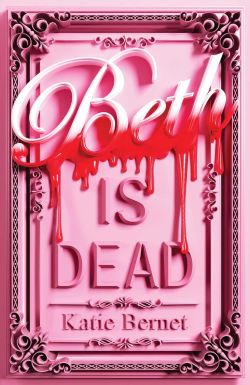
Beth Is Dead by Katie Bernet (mystery, reinvented classic) 2026 / In this contemporary YA novel, the emotional low point of Little Women is recast as a crime to be solved by bickering siblings Meg, Jo, and Amy and Louisa May Alcott’s supporting cast.
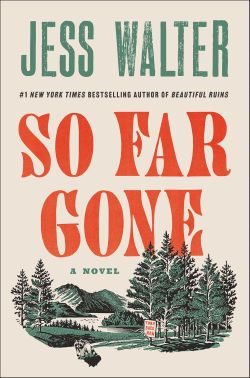
So Far Gone by Jess Walter (literary adventure) 2025. Entertainment meets social commentary in this story about a man who means to leave the world behind, but must return to rescue his daughter and grandkids.
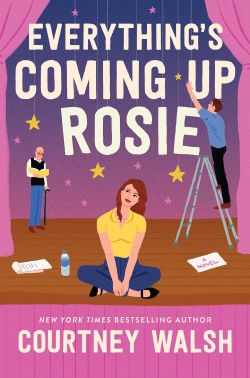
Everything’s Coming Up Rosie (women’s fiction, comedy) by Courtney Walsh 2025 / Protagonists don’t have to be “relatable” or “likable,” but Walsh’s dream-dashed heroine is both. As the label “women’s fiction” comes under scrutiny, such worthy characters might keep the category alive.
|