February 2026
Your Novel’s Ideal Length
How long should a novel be? My annoying stock answer is “as long as it needs to be.” How many words do you need to create your world, animate your characters, develop your themes, and satisfy your plot’s beginning, middle, and end? These are the elements we focus on as storytellers. “Number of words in the manuscript” doesn’t top the list of “things that make a satisfying story.”
Word counts aren’t irrelevant, however, especially if you want to be acquired by a traditional publishing house. Why? The length of your novel is directly related to costs: longer novels are more expensive to edit, design, produce, print, warehouse, ship, and sell. This is why acquisitions—especially debuts—are often capped at 90,000-100,000 words. It’s a financial risk threshold. When I started editing fiction in 1998, the threshold was around 120,000 words. I expect the number to continue falling.
Those of you who are hybrid, indie, or self-publishing can’t escape these practical factors. If you create digital-only books, you’ll eliminate some costs, but if you also want people to buy your books, consider these other word-count influences:
- Genre: Readers have expectations that a romantic comedy will be shorter than an epic fantasy. Learn the typical word counts of your category. If you write much longer or much shorter, you risk losing or disappointing readers.
- Reader attention: No surprise, it’s declining. The Shallows by Nicholas Carr and Stolen Focus by Johann Hari dive deep into why. The increasing number of things clamoring for and depleting our attention is rewiring our brains.
- Risk aversion: The hardest work of publishing a debut novel is getting readers to “discover” it, then commit to reading it. “Should I spend the time and/or money to read this author I’ve never heard of?” Reduce two of the biggest barriers with a book that will take fewer hours to read or cost fewer dollars to buy.
Delivering a story that falls within readers’ expectations, and agents’ and publishers’ limits, is a way of demonstrating your competence. An industry maxim says, “If you don’t have the skills to write a short novel, you don’t have the skills to write a good novel.” So examine what you mean when you claim, “My novel can’t be any shorter.” I assure you—it can be. But at what cost? That question becomes easier to answer as you develop skills to “write tight” while being able to justify every word, sentence, scene, chapter, and creative choice you make.
Perspective
“The most reliable asset any writer has is reader trust. When readers believe you deliver a certain kind of emotional experience, they follow you even when categories shift around you.” Alex Brown "What's Happening in the Book Market Right Now" January 19, 2026
Better Writing Now: How to Trim the Fat
When every word you write matters, which should go and which should stay? This exercise can help hone your craft.
The following sentence is from an early draft of one of my novels. My college-age character has a chronic illness and is exhausted: She knew that this particular fatigue was a harbinger of an infection that would send her straight to the hospital and might even force her withdrawal from classes.
-
Step 1: Identify the core idea. This fatigue meant infection. Can it be stated so simply? If so, you’re done! If not, this shows you what to protect. I need to say more, but I’m going to preserve this focus.
-
Step 2: Get rid of words that don’t add meaning. When point of view is clear, certain attributions are unnecessary (e.g., she knew, she thought, she wondered). She knew that this particular fatigue was a harbinger of the kind of infection that would send her straight to the hospital and might even force her withdrawal from classes.
-
Step 3: Get rid of adverbs (“straight,” “even”) and adjectives (“particular”). Don’t worry; if you can’t live without them, you can add them back later. The purpose of this step is to put each to a challenge test. This particular fatigue was a harbinger of infection that would send her straight to the hospital and might even force her withdrawal from classes.
-
Step 4: Examine each phrase for action, vividness, and precision. “Was a harbinger of” is passive, clunky, and probably not language my young character would use. The active verb “signaled” would be stronger. Also, I’m starting to prefer the adjective “serious” over “send her to the hospital.” Though it’s a good active phrase, in the context of my novel the reader can assume hospitalization. “Withdrawal” sounds like she has an addiction. So I’ll prioritize efficiency and clarity. This fatigue signaled a serious infection that might force her to withdraw from classes.
-
Step 5: Evaluate how well the words reflect their source, be that you, your narrator, or your character. Here, you might reinsert one or two of those adverbs and adjectives you cut. My character is a young voice student enrolled at a music school. This sounds more like her: This kind of fatigue signaled a serious infection that might force her to drop out of school.
The result: clearer meaning, fewer words.
How to Revise Your Novel
Making your novel “as long as it needs to be,” and making each sentence sing are two of many revision tasks. If revising feels overwhelming to you, join me SUNDAY MARCH 8 from 2:00-5:00pm MST for a live Zoom class to help you organize a clear and orderly process. Learn methods of assessing your plot and pace, your character arcs, your stage settings, and your thematic clarity. Receive downloadable worksheets, examples, and resources to help you deliver your best effort to beta readers, agents, editors, and a paying audience. $149, limited to 15 participants. Register here.

Monday in The Novelists Book Club
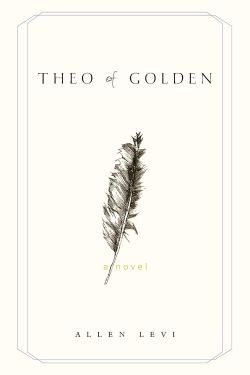
Allen Levi got an idea for a story after buying some portraits at a coffee shop. He’d never written a novel and had no plans to publish, but close friends convinced him to turn the manuscript into a book, which he did in October 2023. Allen’s niece helped him publicize the novel to book clubs on Facebook, and he visited clubs that picked him. By the summer of 2025, Allen was selling a thousand copies per day, but he couldn’t explain why. Traditional publishers started making offers. As I write this, Theo of Golden is #6 on the New York Times bestseller list. Allen had no existing audience, no novel writing experience, no marketing strategy. So what is it about the story itself that might have given it traction? Come with your observations and opinions.
When: Monday, February 16, noon Mountain Time
What: Theo of Golden by Allen Levi
Where: Zoom
Learn more about our monthly book club and register here.
Discussion Questions:
- Why do you think this novel is a bestseller? What do you like/dislike about it?
- What are some of the points where readers can connect to the story emotionally?
- What elements keep readers engaged to the end?
- Theo’s story is told in an omniscient point of view. What effect does this create? Do you think the story would be as effective if Allen had used a limited point of view?
- In what ways is Theo of Golden a timely novel?
You Might Be Interested In . . .
Question from a Client
“Should I make my novel longer?”
For all the talk of having to cut manuscripts down to publisher-approved size, sometimes a manuscript runs short. In the context of traditionally published novels, there’s a funny no-man’s-land between 40,000 words (a long novella) and 70,000 words (a short novel). What should you do if the powers that be declare your novel “too short”?
Making your novel longer just for the sake of length is an unpleasant exercise that won’t make your novel better. So don’t merely add words. Look for opportunities to give your story:
- More of what readers love about your genre or trope: more action, more romance, more humor, more historic texture, and so on.
- A subplot that supports your theme, develops a secondary character, or brings balance to your main plot.
- Deeper or more complex relationship dynamics.
- Additional character experiences that take exploration of your theme into additional spaces.
- A more balanced intensity. Does your serious story also have moments of brightness/joy/happiness? Does your slapstick comedy make room for characters to have honest self-reflection? Does your racing action have moments where readers can catch their breath?
This isn’t an exhaustive list of possibilities. Use them to jumpstart your imagination. One of my clients who faced this situation interviewed his characters, asking them what they needed the story to reveal about them that it hadn’t already. Their answers were surprising and wonderful.
What I’m Reading
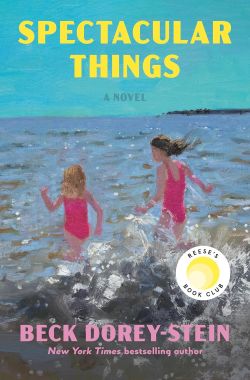
Spectacular Things by Beck Dorey-Stein (orphaned sisters) 2025 / An engaging, dual-timeline novel that covers decades of family history, loving mother-daughter and sibling dynamics, and the pursuit of personal dreams in a context refreshingly free of dysfunction.
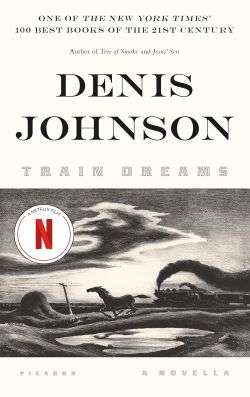
Train Dreams by Denis Johnson (literary historical novella) 2011 / A railroad man haunted by his complicity in a racially motivated murder tries to build a good life. Compare the novel with the Netflix movie for a great discussion about why the author and filmmaker might have chosen to emphasize different elements of the tale.
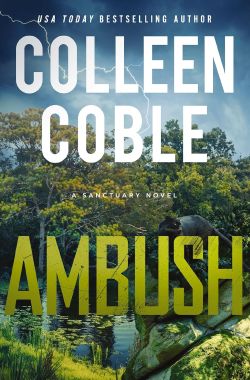
Ambush by Colleen Coble (contemporary romantic suspense) 2025 / Colleen produces pitch-perfect genre fiction for her audience every time. Read her as an author who manages to stay fresh while consistently delivering what her audience wants.
|